Week 1–2
Initial Assessment & Activation
Gap measurement and breathing re-education begin your recovery journey safely.
- Gap measurement
- Breathing re-education
- Gentle core switch-on
Phase 1 / 4

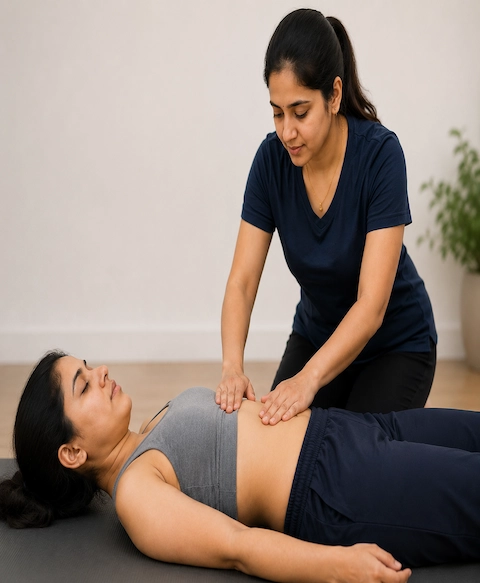
Many new mothers notice Diastasis Recti symptoms quietly surfacing weeks after delivery, often appearing as a visible bulge near the belly button, softness around the midline or lower back pain that resists rest. These signals point toward abdominal muscle separation, weakening core support and limiting movements like lifting, bending or carrying a baby. Sport Fit Physio Care understands how frustrating this stage feels, since most women expect quick recovery and instead face ongoing discomfort. Our team identifies the exact cause behind your symptoms before recommending treatment.
Closing your abdominal gap calls for specialised diastasis recti treatment, not generic exercise routines found online, since incorrect movements often worsen separation. Our clinic combines Integrated Manual Therapy™, Mrs. Famidha's exclusive system, with Pilates-Based Core Rehabilitation structured around your gap measurement and recovery stage.
Hands-on release of tight muscles and joint restrictions, preparing your body for safe core rehabilitation.
Safe postnatal Pilates rebuilding deep core strength and pelvic floor function through each recovery stage.
Progressive deep abdominal retraining from initial activation through to full functional strength.
Our postnatal specialists will create a personalised programme built around your stage of recovery, your goals and your lifestyle.
Beginning treatment often feels difficult while managing a newborn and constant fatigue, yet structured support makes early progress easier for most mothers. Sport Fit Physio Care provides a clear, personalised path from initial assessment through ongoing sessions designed around individual recovery needs. Specialist guidance continues at every stage, adjusting the program as strength improves with consistent monitoring. Most patients notice visible improvement in core stability and reduced gap width within 6 to 12 weeks, though pace depends on individual condition. Mrs. Famidha personally designs each programme around your body's goals.
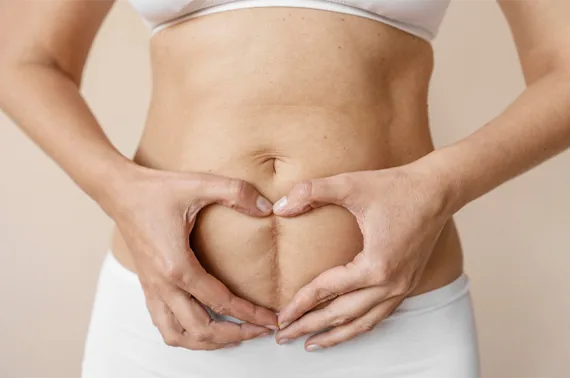
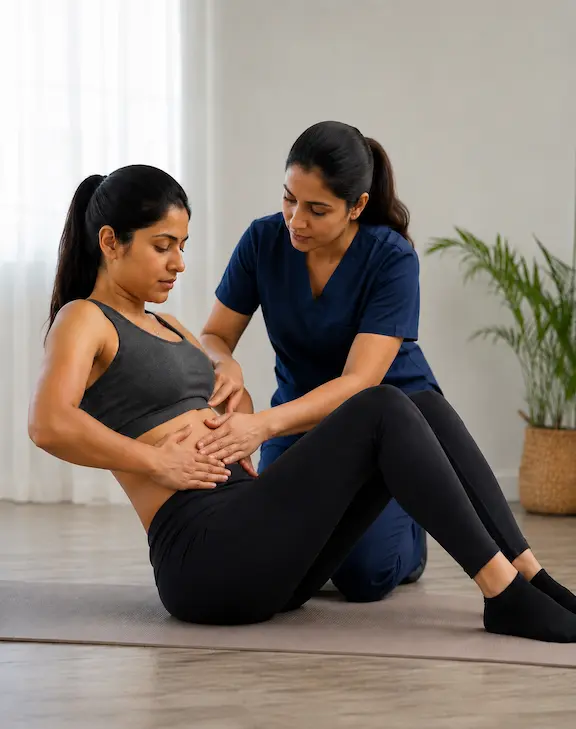
Crunches, sit-ups and heavy lifting feel like natural recovery steps, yet these movements increase intra-abdominal pressure and push separated muscles further apart. Core separation after pregnancy responds best to sequenced movement, beginning with breath coordination before progressing toward functional strength work. Generic postpartum workout videos rarely account for individual gap width, often worsening the condition. Our specialist evaluates muscle tone and gap measurement before selecting any exercise.
Core Instability : Weakens the abdominal wall, affecting posture and balance during daily movement.
Pelvic Strain : Overworks pelvic floor muscles, causing leaks and discomfort without targeted rehabilitation.
Back Pain : Increases lumbar strain during everyday activities when left untreated.
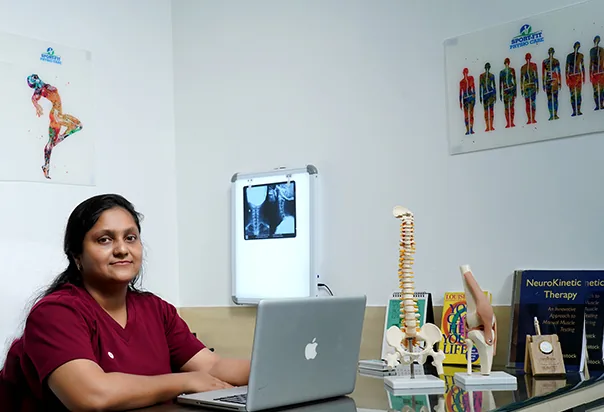
Mrs. Famidha, M.P.T (Neuro), is a leading Women's Wellness and Rehabilitation Specialist, bringing focused clinical experience in postpartum recovery and diastasis recti rehabilitation. Her approach combines Integrated Manual Therapy™ with Pilates-based rehabilitation to restore core stability and rebuild pelvic floor strength safely. Personalised recovery programmes progress from gentle activation toward full strength restoration over time. Her expertise in neuro-rehabilitation and pelvic health ensures precise, compassionate treatment.
Book ConsultationNot sure if your tummy gap is Diastasis Recti or just normal postpartum softness? This simple self-check helps you understand what's happening before your assessment.
How to Check: Lie on your back with knees bent, feet flat on the floor. Place your fingers just above your belly button, gently pressing into your abdomen. Lift your head and shoulders slightly off the floor, as if starting a sit-up. Feel for a gap between your abdominal muscles, note how many fingers fit (1-2 fingers is normal, 2-3 or more may indicate separation).
A self-check gives you a starting point but gap width, depth and muscle tone need a trained eye to assess accurately. Mrs. Famidha's clinical evaluation confirms the exact severity and the safest path forward for your body.
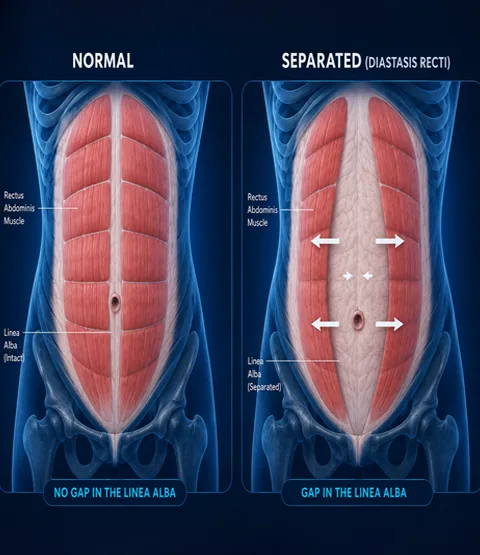
Addressing your tummy gap after delivery begins with a thorough clinical assessment before any treatment starts. Gap width, muscle tone, posture patterns and functional movement are evaluated during your first visit. This detailed process ensures your recovery program reflects your specific condition rather than a generic template. Mrs. Famidha personally reviews each assessment, so your plan fits your daily life and recovery stage from the very first session. Baseline measurements are recorded using validated diastasis recti testing methods, giving accurate tracking points for future sessions. Lifestyle factors such as breastfeeding routine, sleep pattern and daily activity load are also discussed, since these directly influence healing speed. Follow-up assessments at regular intervals confirm gap closure and core strength gains are progressing as expected.
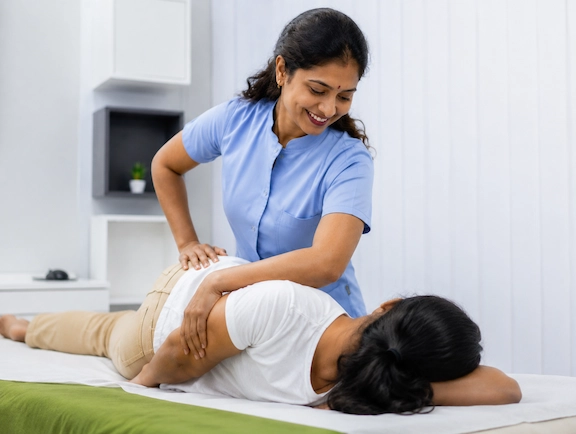
Targeted manual therapy releases tension within fascia and surrounding tissue, preparing your body for structured strengthening. Tight connective tissue and compensatory muscle patterns often prevent abdominal muscles from functioning correctly until addressed through skilled hands-on technique. Our approach includes myofascial release, soft tissue mobilization, trigger point therapy and joint mobilization, tailored to your specific restrictions and recovery stage. Most patients attend 2-3 sessions per week during the early recovery phase, gradually tapering as mobility improves. This hands-on work restores spinal and pelvic alignment, prepares the abdominal wall for safe loading and sets the foundation for the Pilates-based strengthening phase that follows.
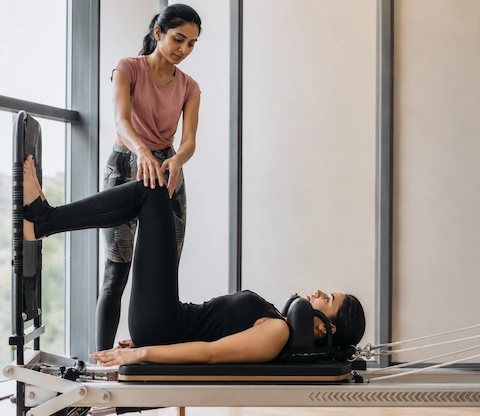
Generic gym workouts target surface muscles only, leaving deeper structural support unaddressed during postpartum recovery. Pilates-based rehabilitation instead activates the transverse abdominis, pelvic floor and multifidus as one connected unit, since these muscles form the true internal support system for the spine and abdomen. Rebuilding them correctly closes the separation progressively. Controlled breathing patterns are paired with each movement, allowing the deep core muscles to engage without added pressure on the healing tissue. Exercises progress gradually from gentle activation to functional loading, matching each stage of recovery rather than following a fixed timeline. Movements like crunches and sit-ups are avoided early on, since these increase intra-abdominal pressure and can widen the gap further.
Pilates-based rehabilitation progresses through three structured phases, each targeting specific movements to safely rebuild core strength without worsening separation.
Diaphragmatic breathing and gentle transverse abdominis engagement begin this stage without straining separated muscles.
Modified planks and bird-dog variations build strength through guided sessions as core stability progressively improves.
Functional lifting and carrying technique connect recovery to everyday movements like picking up your baby safely.
Mrs. Famidha designs each phase around your gap measurement, recovery stage and daily lifestyle.
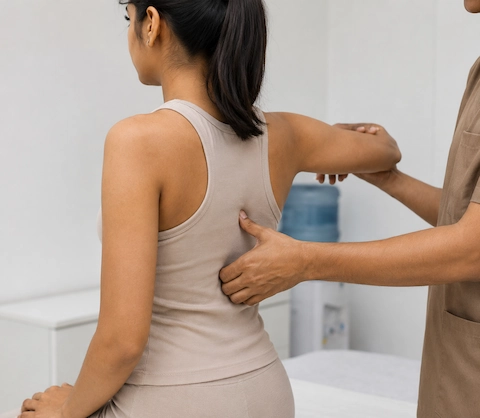
Pregnancy often shifts posture permanently, adding strain to an already weakened core. Forward head position, rounded shoulders and increased lower back curve overload the same muscles affected by abdominal separation, slowing healing. Targeted correction breaks this cycle through thoracic mobility work, pelvic tilt correction and glute activation exercises. Ergonomic guidance for feeding, carrying and lifting positions supports better alignment, giving the weakened core a stable foundation to rebuild strength safely. Daily habits like prolonged phone use, one-sided baby carrying and slouched feeding postures are reviewed individually, since small repeated patterns often cause more strain than occasional heavy lifting. Correcting these habits alongside structured exercise helps the spine and pelvis return to a balanced, supported position over time.
Completing diastasis recti treatment does far more than close an abdominal gap over several weeks of rehabilitation. A strong core protects the lower back, stabilises the pelvis and restores the confidence to handle daily motherhood demands without pain. These benefits reach well beyond aesthetics for every woman who completes her program fully. Patients finishing recovery with Sport Fit Physio Care report less back pain, better posture and higher energy levels long after their final session.
Gap measurement and breathing re-education begin your recovery journey safely.
Pilates-based exercises combined with manual therapy rebuild core stability.
Functional movement patterns restore everyday strength and confidence.
Return-to-exercise guidance supports long-term core health.
Traditional gym workouts increase belly pressure and widen the abdominal gap. Avoiding these exercises is crucial for safe recovery.
that widen the abdominal gap
spiking abdominal pressure
straining the healing midline
A visible bulge along your midline, especially when sitting up, signals separation. Soft tissue near the belly button and back pain often accompany it.
Yes, most cases respond well to physiotherapy combining manual therapy with core rehabilitation. Surgery is rarely needed.
No, treatment stays effective regardless of how long ago delivery occurred, even years postpartum.
Most patients notice improvement within 6 to 12 weeks of consistent rehabilitation, depending on severity.
No, generic routines often worsen separation since crunches and lifting increase abdominal pressure.
Online • Usually replies instantly